
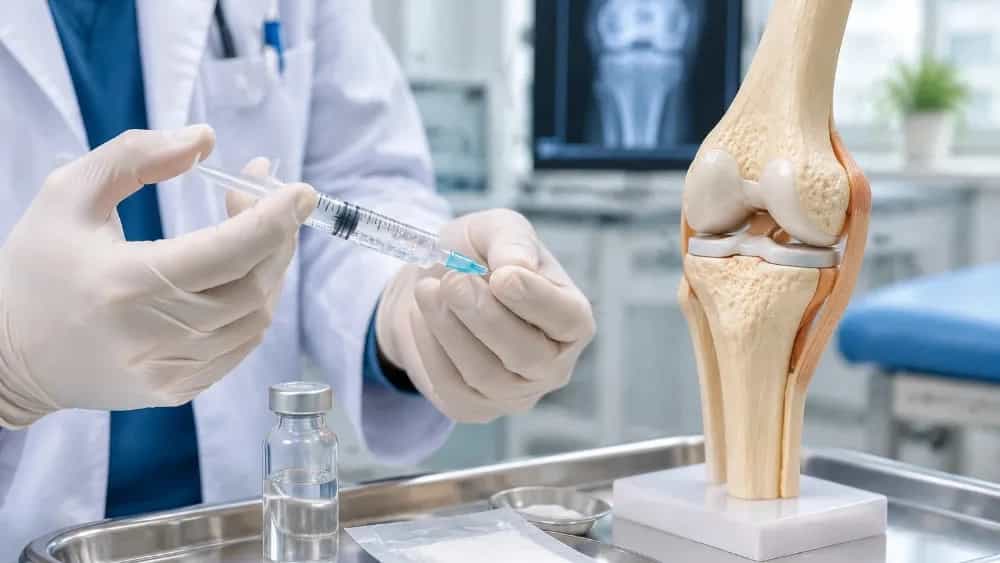
Knee gel injection is a minimally invasive treatment method for those suffering from arthritis and cartilage wear, during which hyaluronic acid is injected directly into the joint space to replace lost synovial fluid. This gel restores natural shock absorption and lubrication function to the joint, minimizes the friction of the bony surfaces and noticeably inhibits knee pain. Patients living in the west of Mazandaran can receive this outpatient treatment without the need for hospitalization based on the radiographs and degree of joint wear, by visiting the orthopedic specialist Dr. Reza Shafiei's office in Tonkabon.
Life in coastal and humid cities in the north of the country, such as Tonkabon, Shaheswar and Ramsar, is always associated with special skeletal-muscular challenges. The high humidity of the air increases the sensitivity of the joints involved in wear and tear, and the slope of the foothills, daily walking, farming in citrus orchards and tea cultivation in this climate imposes an additional mechanical load on the knee joints. In such a situation, the degeneration of the slippery fluid of the joint accelerates and daily movements are faced with burning, locking and progressive pain.
The mechanism of the effect of hyaluronic gel injection on knee arthritis
In a healthy joint, the high concentration of hyaluronic acid prevents direct wear of the femur on the tibia. With the progress of arthritis or osteoarthritis, the elasticity and adhesion of this biological fluid decreases and the joint works like an engine without engine oil. When the injection of knee gel in the orthopedic clinic is done correctly, the volume of the joint is filled again and the physical friction is close to zero.
According to clinical observations in the office, this substance is not just a simple pain reliever, but a supportive biomechanical agent. Hyaluronic acid stimulates the production of endogenous collagen and synovial fluid, suppresses inflammation caused by the breakdown of cartilage particles, and provides lasting protective effects for the remaining cartilage.
The difference between the performance of knee gel and Corton
Many patients consider gel injection to be the same as coronet, while the treatment path of the two is completely separate. Cortone is a corticosteroid drug aimed at quickly suppressing acute inflammation, and its frequent use makes cartilage tissue more fragile over time. On the other hand, hyaluronic acid gel has nourishing and hydraulic repair properties and does not destroy the biological tissue of the cartilage, but neutralizes the load imposed on the knee when bearing weight.
The main candidates for knee gel treatment
The correct selection of the patient is the most important factor in the success of this method. Gel injection is most effective for patients who are in the early to moderate stages of arthrosis (radiography grades 2 and 3); It means a condition where the joint space is partially preserved and the cartilage layer is not completely destroyed.
People who cannot undergo the heavy operation of joint replacement (arthroplasty) due to underlying diseases such as heart failure or uncontrolled diabetes, can regain their movement independence for 6 to 12 months with periodic gel injections. Also, active people who have burning pains in the patella and knee due to past injuries, meniscus tear or excess weight give a brilliant therapeutic response to this process.
Who should not use knee gel?
In cases where joint wear has reached grade 4 and the stage of bone-to-bone contact, hyaluronic acid injection is not the first choice treatment and may only be used as a temporary intervention to temporarily reduce pain. Also, if there is an active skin infection at the injection site, infectious accumulation inside the joint, or known clinical sensitivities to the gel components, the injection is not performed.
Gel injection at the orthopedic clinic of Dr. Reza Shafiei in Tunkabon
Technical accuracy in entering the needle into the space inside the joint capsule determines the efficiency of the drug. In Dr. Reza Shafiei's office in Tonkabon, before any procedure, a detailed structural evaluation is done by examining radiology photos and, if necessary, MRI, to determine the exact thickness of the joint.
If there is an effusion or excessive swelling of the knee, first the excess liquid is removed through aspiration to relieve the pressure inside the joint. Then, under sterile conditions and with specialized fine needles, the standard gel is directly inserted into the inter-articular space at the correct angle. The whole process ends within a few minutes without causing significant discomfort to the patient.
Differentiation in using high molecular weight reputable brands
The quality of the injected gel makes a major difference in the durability of its effect. In practice, it has been observed that single-injection or triple-injection gels with high molecular weight and standard viscoelasticity have a much longer shelf life against intra-articular degrading enzymes. Considering the presence of counterfeit and unauthorized products in the drug market, guaranteeing the physical and medicinal authenticity of consumer brands is a fundamental priority in Dr. Reza Shafiei's clinic.
Key measures before and after knee gel injection
The long-term effectiveness of the treatment depends on the patient's movement behavior during the first 48 hours:
- Avoid carrying heavy loads, climbing steep stairs, and erosive standing for two days after injection.
- Using a cold compress for 10 to 15 minutes on the site in case of initial heat or brief heaviness.
- Avoid fast walking and impact sports until the gel is in harmony with the inner tissue of the knee.
- Start strengthening exercises for the quadriceps muscle from the week First, to stabilize the stability of the joint and reduce the pressure on the gel