
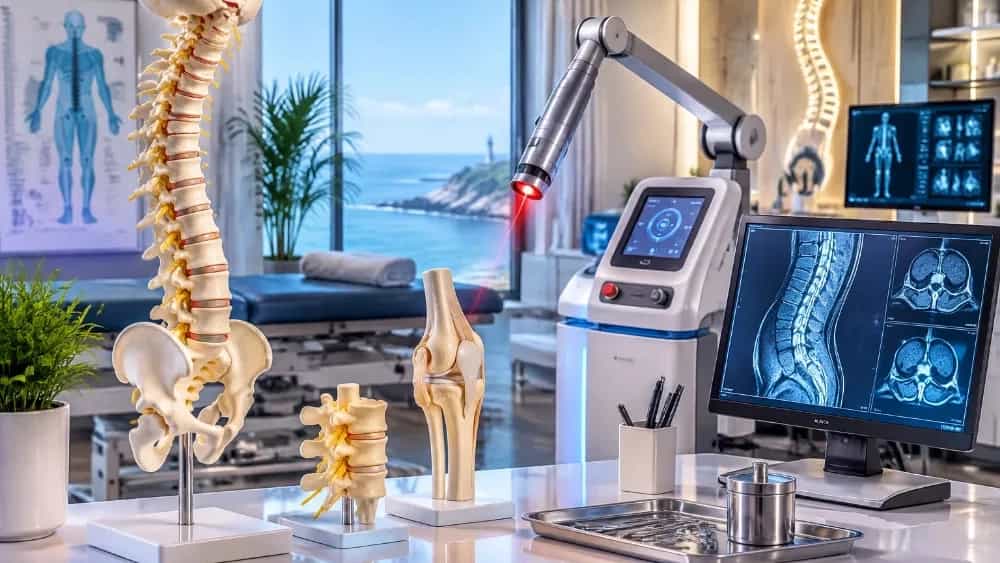
Lumbar disc treatment without surgery in Tonkabon is done by evaluating sciatic nerve root compression and direct use of targeted anti-inflammatory methods such as transforaminal injections, ozone therapy and high-power laser. More than 90% of patients with herniated or protruding disc do not need open surgical blade by timely control of tissue inflammation and correcting the muscle balance of the vertebrae. In the modern orthopedic approach, returning the patient's range of motion without spending a long period of recovery and maintaining the structural integrity of the lumbar spine is a definite priority.
Lumbar disc pathophysiology mechanism and driving factors in northern climatic conditions
Extrusion of the gelatinous material inside the disc (nucleus pulposus) from the damaged fibrous wall (annulus fibrosus) does not necessarily mean the need to cut and drain the disc. In most cases, the main cause of shooting pains in the pelvis and legs is not pure mechanical pressure, but a strong chemical reaction that causes the release of inflammatory mediators in contact with the spinal nerve root. This phenomenon causes swelling of the nerve, disturbance in capillary blood supply and transmission of continuous pain pulses to the lower limbs.
In the field encounter with the patients of North region and Tunkabon city, the factor of constant environmental humidity and atmospheric pressure changes visibly increase the intensity of the protective spasms of the paraspinal muscles. In addition, the local lifestyle including periodic physical activities such as gardening, farming, and carrying loads on uneven terrain puts the lumbar facet joints under asymmetric torques. When this mechanical overload is accompanied by swelling caused by cold and humidity, the symptoms of the disease appear with double intensity.
The difference between stable disc protrusion and emergency surgical conditions
In clinical examinations, there is always a clear border between cases requiring maintenance treatment and emergency referral situations. If there is no urinary and stool control disorder or ankle drop (foot drop), the chance of treatment with closed methods is very high. Severe pain, tingling and numbness of the fingers usually indicate that the nerve root is under pressure without cell death of the neurons and is well controlled by reducing the local edema.
Non-surgical protocols for control and repair of disc herniation in Tenkaban
The multi-step treatment approach is based on controlling the pain cycle, absorbing edema, releasing the nerve root and then restoring lumbar stability. This process allows the tissue to reduce the protruding part over time through the natural process of phagocytosis.
Transforaminal injection and epidural block under ultrasound guidance
One of the most effective methods in acute shooting pains is the direct transfer of controlled and concentrated anti-inflammatory drugs to the epidural space in the closest distance to the involved nerve root. In practice, it has been observed that unlike systemic intramuscular injections that spread throughout the body, accurate injection in the nerve foramen provides a high drug concentration exactly on the target tissue and stops the cycle of nerve stimulation within a few days.
Ozone therapy and the effect of targeted oxidation on the disc
Oxygen-ozone gas oxidizes the liquid inside the disc and reduces the volume of the herniated tissue without creating a surgical scar. This process is accompanied by the contraction of the protruding chamber and the pressure is removed from the spinal cord. At the same time, the inhibitory effect of ozone on pro-inflammatory cytokines inhibits root and shooting pains.
High-power laser and tachotherapy focused on deep tissue
High power laser treatment wavelengths penetrate deep into the tissues surrounding the spine and increase the production of adenosine triphosphate (ATP) in the damaged cells. This biostimulation effect strengthens local blood flow and relieves hard muscle spasms caused by pain.
The common mistake of absolute rest and the necessity of active rehabilitation
One of the common mistakes in dealing with a lumbar disc is lying in bed for a long time. Experience shows that absolute rest for more than two to three days not only does not help the disc shrink, but also causes atrophy of the deep multifidus muscles, a decrease in connective tissue metabolism, and chronic pain. Guided movements under the supervision of an orthopedist keep the lymphatic flow active and clean the waste products from inflammation around the lumbar nerve.
Clinical stages of specific diagnosis by an orthopedic specialist
MRI image alone is not decisive for the accurate implementation of non-surgical treatments. Matching the radiological image with detailed clinical neurological tests, including assessment of tendon reflexes, thumb and ankle range of motion, and SLR testing, will determine which vertebra is the real cause of pain. In many cases, the radiological image shows the protrusion in several vertebrae, but the symptomatology happened only on one level, which is determined by careful examination.